



Career Guides
Most Profitable Skilled Trades for 2026 and Beyond
You do not need a four-year degree to earn big. In 2026, the highest-paying skilled trades will favor people who show up, learn fast, and stack the right licenses and hours on the job.
Career Guides
December 7, 2025 | Andy
You have the credentials and the passion, but your inbox is empty. It is frustrating to see others land roles while you are stuck. This guide breaks down the exact steps to fix your strategy and finally secure that dietitian job offer you worked so hard for.
You have the credentials and the passion, but your inbox is empty. It is frustrating to see others land roles while you are stuck. This guide breaks down the exact steps to fix your strategy and finally secure that dietitian job offer you worked so hard for.

Most resumes fail because they look like a list of chores rather than a record of success. When a hiring manager looks at your application, they spend about six seconds deciding if you are worth a call. If you are a new graduate, you cannot rely on years of Experience, so you must make your internship rotations work double duty.
Forget the Objective statement. Employers don't care what you want; they care what you can do for them. Instead, use a Professional Summary. This is a three-line pitch that sits at the top of the page.
Bad: New RD looking for a clinical role to grow my skills.
Good: Registered Dietitian with 1,200 hours of supervised practice in high-acuity clinical settings. Proven ability to manage complex enteral nutrition support and provide patient-centered education for diabetes and renal disease.
The biggest mistake in any nutrition career hunt is writing a resume that reads like a job description. Everyone knows a clinical RD performs assessments. What they want to know is how well you did it.
Instead of saying Responsible for patient education, try Educated 15+ patients daily on low-sodium diets, resulting in a 20% increase in patient satisfaction scores during the clinical rotation. Use numbers whenever possible. Did you save the department money? Did you improve a workflow? Did you create a handout that the Hospital still uses? Put that in there.
Your resume should change as you grow.
For the New Graduate: Your education and internship rotations are your Experience. List them prominently. Highlight specific competencies like TPN/PPN calculations or community program planning.
For the 1–3 Year Professional: Move your education to the bottom. Focus on your first professional role. Highlight how you took ownership of a specific floor or clinic. Mention any certifications you are working toward, like the CDCES or CNSC.
For the Career Changer: Focus on transferable skills. If you are moving from clinical to sales, highlight your ability to explain complex data to non-experts and your track record of meeting patient care deadlines.
Stop using the same generic cover letter for every dietitian job. Hiring managers can spot a template from a mile away. A good cover letter should bridge the gap between your resume and the job description.
The Hook: Mention the role and explain why you are interested in this organization. If you saw a recent news story about their new wellness initiative, mention it.
The Proof: Pick two requirements from the job posting. Explain exactly how your Experience proves you can do those things.
The Call to Action: Thank them for their time and state that you look forward to discussing how you can contribute to their team.
The most enormous red flag is a letter that could be sent to any hospital in the country. If you don't mention the specific facility name or their patient population, you are telling the recruiter you are lazy. Spend ten minutes on their website. Do they specialize in oncology? Mention your interest in cancer care.
In today's market, your career planning must include a digital footprint. Recruiters often search LinkedIn before checking their internal applicant tracking system.

Your headline should not just say Registered Dietitian. It should include keywords like Clinical Nutrition, Diabetes Educator, or Renal Specialist. This helps you show up in searches.
Use the Featured section to upload your portfolio, a sample meal plan you created, or a presentation you gave during your internship. On the flip side, check your other social media accounts. If your Instagram is public and full of non-evidence-based nutrition advice, it could cost you a clinical job.
If you only look at Indeed, you are missing out. The most successful job search strategies use multiple channels.
General sites are crowded. Look at niche boards like NutritionJobs.com or the EatRight Job Board. These sites are industry-specific, meaning employers there are looking for RDs, not just general health coaches.
Many large hospital systems do not post all their openings on third-party sites. Make a list of the top five hospitals in your area and check their Careers page every Monday morning.
Many RDs treat the job search like a lottery—the more tickets they buy, the better their chances. This is a mistake. Applying to 50 jobs with a generic resume is less effective than applying to five jobs with a tailored approach.
Spray-and-pray rarely works in healthcare. When you apply for a dietitian job, the hiring manager is looking for a specific clinical fit. If you send a clinical resume to a community nutrition role, you are wasting your time.
Searching for a job is a job. If you are unemployed, aim for 5–10 high-quality, tailored applications per week. If you are currently working, aim for 2–3.
How do you know if a job is worth your energy? Look for these signs:
Even with a perfect application, a personal connection can move you to the top of the pile instantly.
Networking sounds scary, but it is just talking to people. In a small field like dietetics, who you know matters just as much as what you know. Many roles are filled before they are ever posted publicly.
Find RDs who are doing the job you want. Send them a short message on LinkedIn.
Your internship preceptors are your best advocates. Even if their facility isn't hiring, they know other RDs who might be. Send them a quick status update and let them know you are looking for a role in a specific area.
If you get the interview, they already think you are qualified on paper. The interview preparation phase is about proving you can handle the clinical and social realities of the job.
For situational questions (e.g., "Tell me about a time you disagreed with a doctor"), use the STAR framework. But don't just tell a story—tell a story with a so what.
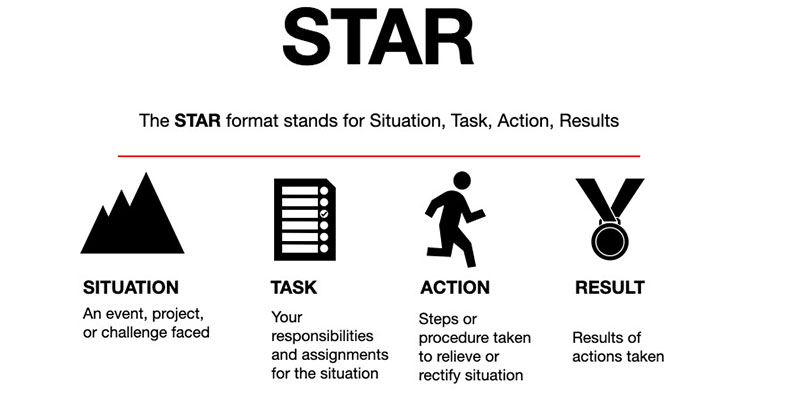
Situation: A doctor ordered a diet that contradicted the patient's renal needs.
Task: I needed to ensure patient safety while maintaining a professional relationship.
Action: I approached the doctor privately with the latest clinical guidelines and suggested an alternative.
Result: The doctor changed the order, and the patient's labs improved. This built a bridge of trust for future consults.
Within 24 hours, send a thank-you email. This isn't just a polite gesture; it's a second chance to sell yourself. Mention something specific you discussed.
Example: "I especially enjoyed our conversation about the new malnutrition screening protocol. It sounds like a great initiative, and I'd love to help the team implement it."
Every interview is a learning opportunity. After you hang up the phone or leave the building, take five minutes to write down:
Which questions felt difficult?
What part of your Experience did they seem most interested in?
Did you forget to mention any key achievements?
Use these notes to adjust your "pitch" for the next one. If you get a rejection, it is okay to ask for feedback. A simple, "I appreciate the opportunity. If there is one area where I could improve my candidacy for future roles, I would value your insight," can sometimes lead to a breakthrough.
The path from new graduate to employed professional is rarely a straight line. You will get rejections. You will have interviews that feel awkward. But if you keep refining your resume, reaching out to your network, and practicing your interview stories, the right offer will come.
Focus on the value you bring to the table. You are a highly trained health professional with the power to change lives through food. According to the U.S. Bureau of Labor Statistics, the field is growing, and your skills are in demand. Hold onto that confidence, follow the steps in this guide, and you will find your place in the world of nutrition.
Career Training
November 7, 2025
Career Guides
October 23, 2025
Career Guides
October 14, 2025
Career Guides
October 8, 2025
Career Guides
You do not need a four-year degree to earn big. In 2026, the highest-paying skilled trades will favor people who show up, learn fast, and stack the right licenses and hours on the job.
Career Guides
Tired of the same old clinical grind? The 2026 landscape is shifting fast. If you don't adapt, you risk being left behind. Let’s explore how these emerging shifts will redefine your professional future and help you secure the most rewarding roles in the industry.
Certifications
You want a cert that moves your resume to the yes pile. Focus on employer-recognized programs, real projects, and proof you can run campaigns without hand holding.
Career Training
Explore practical IT training for career switchers with no tech background. Learn about beginner IT support programs, non-technical IT training, and realistic paths into tech careers.
Education Programs
You can cut the cost of a bachelor’s in a smart 2+2 plan. Start at a community college, transfer into a university major with junior standing, and graduate with far less debt if you manage credits tightly.Let’s break down more to save your wealth.
Certifications
You want the Admin cert for real career lift, not just a badge. Here is a no-nonsense study plan, what is on the test, and how to pass on the first try.